
How puppy cuddles boost mental health
by Olivia Kennaway, Paws in Work blogger.
Have you ever been looking longingly into a pup's eyes and felt a surge of warmth wash over you, a soothing warmth that relaxes you yet hurts your heart with happiness? Chances are, you’ve been hit with a case of ‘the love hormone’, otherwise known as oxytocin.
But what is oxytocin, and how does it impact our mental wellbeing? More to the point, how do puppy cuddles help release it? In this handy guide, we cover the science behind it.
Starting with oxytocin… what is it?
Produced in your brain (hypothalamus), oxytocin is a hormone that stimulates the feelings of happiness, love and trust, and enhances social bonding and social recognition, primarily between a mother and an infant.
Think of the oxytocin production as being controlled by a positive feedback mechanism in our brains (the pituitary gland). This mechanism allows the release of the oxytocin hormone when a trigger occurs, such as maternal behaviour like breastfeeding, hugging, or cuddling.
More recently, oxytocin has been suggested to be an important player in a certain social behaviour; hence it’s popular nickname ‘the love hormone’ (we’ll leave it to you to work out the behaviours associated with it). This release of oxytocin into your body, in turn, reduces the levels of cortisol (otherwise known as the stress hormone) in your bloodstream (i.e. it reduces anxiety and depression).
So, the release of oxytocin = important for social and relationship bonding and makes us feel less stressed.
11 interesting effects of oxytocin.
That’s quite a lot of science to unpack in one go, so to make it easier to understand, we’ve listed the common effects of oxytocin, which include:
• Promoting attachment
• Solidifying relationships
• Easing stress
• Crystallising emotional memories
• Facilitating childbirth and breastfeeding
• Boosting sexual arousal
• Reducing drug cravings
• Improving social skills
• Triggering protective instincts
• Inducing sleep
• Fostering generosity

Where do the puppies come in?
That’s the big question! Well, a scientific study was conducted to measure the effects of oxytocin and cortisol levels (the stress hormone) when interacting with a dog. The boffins running the experiment asked 10 women to interact with their labradors, and then they measured the effects this had on both parties (pup and human).
Showing that the cuddles stimulated the feelings of happiness in dogs
The owners' oxytocin levels peaked between just 1 and 5 minutes.
*means findings based on non-transformed data
It's clear from the study’s finding that a cuddle from a puppy, or pooch, can have huge physiological benefits for both of you, leaving you both happier and more relaxed (which is why pets can be a prescription for a happier, healthier life). These benefits are just one of the reasons we offer puppy therapy events through various workplaces and why they’re so popular.
Paws and people.
Dogs and people have a long-standing relationship, which is estimated to have started over 32,000 years ago, when dogs split from grey wolves and began to evolve into what we recognise as domestic dogs today. Through time and research, it’s become evident that this relationship has extended beyond basic companionship, improving mood and helping with mental health, which is reflected in some of the initiatives used by businesses and public services.
One recent example is that the ability for dogs and pups to assist with mental health was recognised by the prison systems. The mental health impact of therapy dogs in prisons was commissioned by the Centre for Mental Health and received extremely positive feedback, like these comments from one prisoner, who said, "Dogs have a magic effect on you; you can feel their love, and that just makes you feel better inside.”
As well as prisons, unsurprisingly, psychiatric hospitals also use animals as therapy for mental health. The State Hospital in Scotland, one of four high-security psychiatric hospitals in the UK, is doing just that. Patients stay, on average, up to seven years, and staff say that animal therapy helps to do the following:
• Assist with problem-solving skills
• Develop empathy
• Create a sense of responsibility
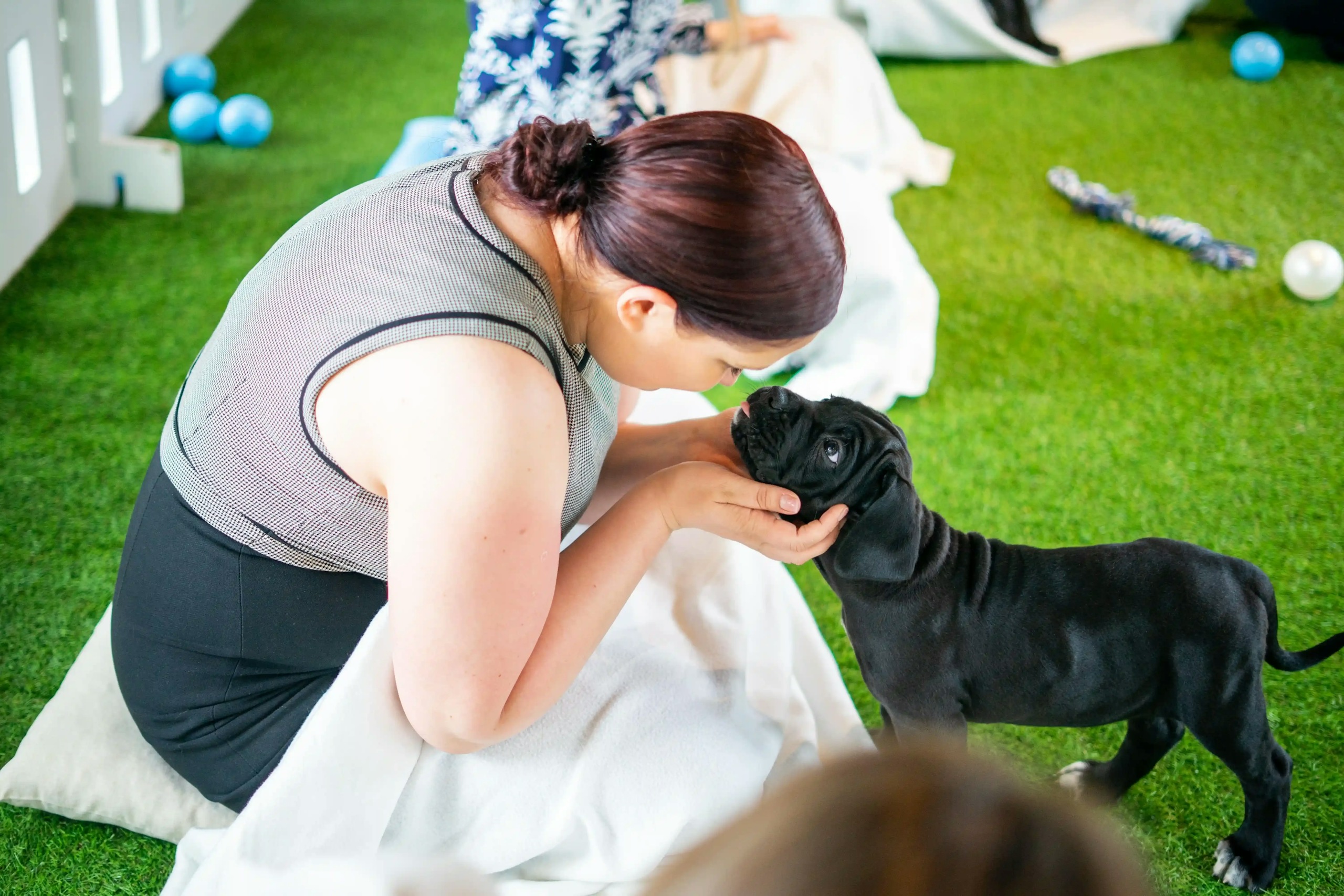
Are you in need of some oxytocin?
Here at Paws in Work, we also know the huge mental health benefits of puppy therapy (and the importance of socialising puppies). If you and your colleagues need some mental wellbeing TLC in your workplace, have a look at our fully licensed puppy therapy sessions. We promise it’ll lower those cortisol levels!
Similarly, if you or someone you know needs someone to talk to or a helping paw, remember to check out our Paws in Work mental health support pages. We also offer an array of mental health training courses if you are looking to continue expanding your overall knowledge of mental health.
References
‘Dogs have a magic effect’: how pets can improve our mental health

The Summer 'Squeeze': Why teams need more support in June, July and August
Summer isn't as quiet as you think. Here's what the data says about burnout in June, July and August and five practical ways to support the teams still at their desks.

The importance of men’s mental health and how to support them in work
Men's mental health is becoming a more common talking point, especially in work. Learn how to support your male employees with this handy guide.

Mental Health Awareness Month: 5 Ways to Support Your Staff
With mental health affecting around one in four people in England every year, Mental Health Awareness Month is the perfect opportunity to review your policies and introduce new initiatives, as we outline in this handy guide.